
DNA GUIDE · DUBAI
DNA privacy, consent and data questions
Genetic data can remain informative for years and can reveal information about biological relatives. Informed consent should cover the purpose, sample, analysis, result, data use, sharing, storage, withdrawal options and limits—not merely permission to take a swab.

What should informed consent cover?
Consent should be specific enough for you to understand what is happening and voluntary enough to allow a real choice. Ask for separate explanations of testing, research use, relative matching and future contact where relevant.
- Purpose and exact scope of the test
- Possible expected, uncertain and incidental findings
- People who can access or receive the report
- Laboratory, processing locations and transfers
- Sample and data retention periods
- Research, matching and commercial uses
- Withdrawal, deletion and their practical limits

Which questions should you ask the provider?
Ask the legal entity name, privacy contact, laboratory route, security controls, breach process and user-rights procedure. Marketing phrases such as ‘secure’ or ‘confidential’ are not a substitute for a specific policy.
Control
Who determines how the sample and data are used?
Location
Where are the sample, report and backups processed or stored?
Sharing
Which laboratories, platforms, partners or authorities may receive data?
Exit
What can be deleted or destroyed, and what cannot be withdrawn?
How can you reduce avoidable privacy risk?
Use a unique password and multifactor authentication when available, limit optional matching, avoid uploading raw DNA files to unknown services, verify recipients before sharing and keep reports out of shared devices or chats.
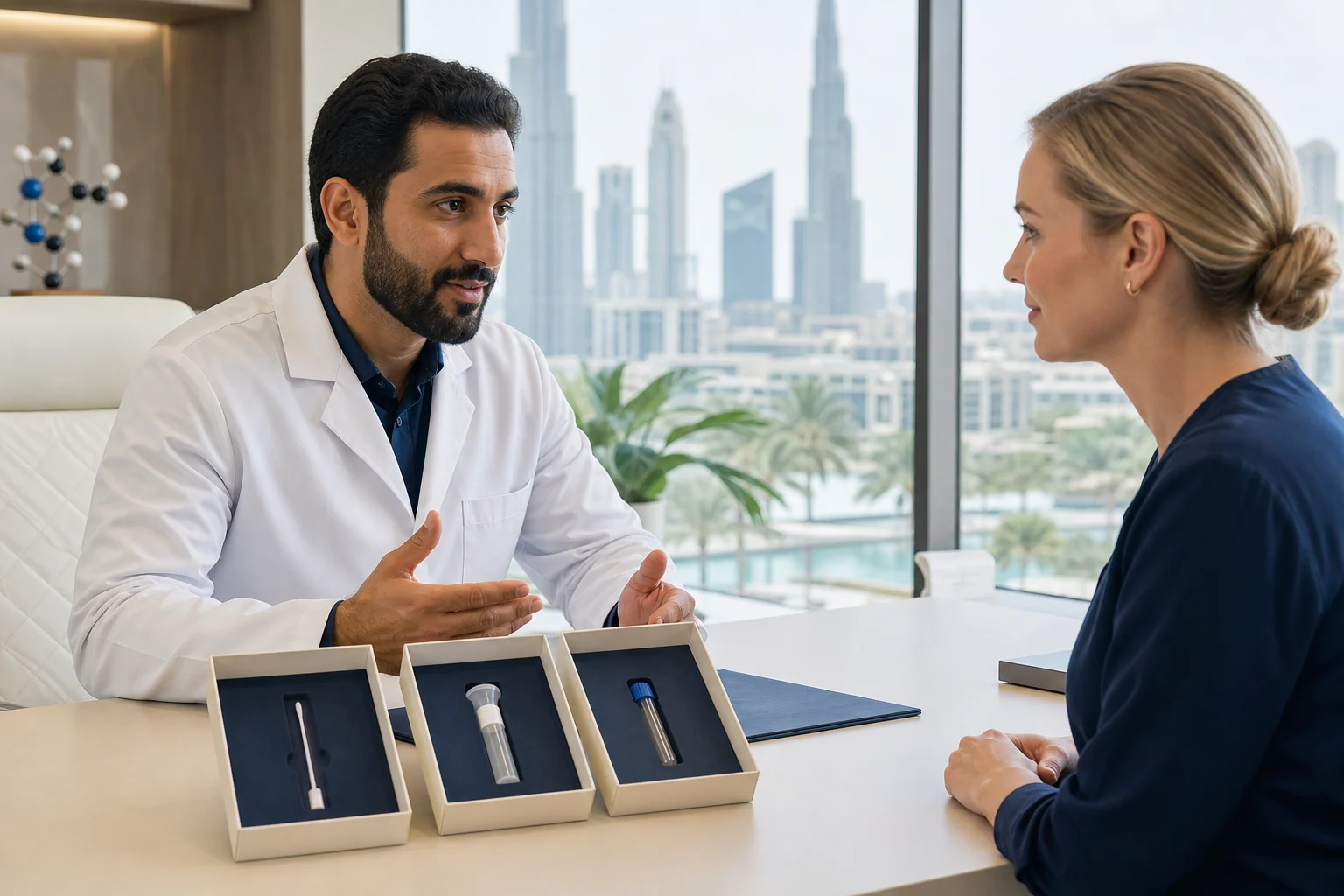
Answers before you decide.
Frequently asked questions
Can I ask a provider to destroy my DNA sample?
Ask before testing whether destruction is available, when it occurs and how it is confirmed. Deleting an account may not automatically destroy a stored sample or reverse prior authorised use.
Are genetic results only about me?
No. They may reveal shared biological information about relatives, so privacy and communication decisions can extend beyond one person.
CONTINUE EXPLORING
Your next question, explained.
TEST ENQUIRY
Make the question clear before choosing the test.
A team can discuss availability and a next step. This site cannot interpret a personal report or guarantee legal acceptance.
The appropriate test depends on the question, consent, sample, laboratory or provider and intended use. This guide cannot confirm availability, diagnosis, turnaround time, accuracy for a specific product or legal admissibility.